The Alamo
Dallas disappeared behind them beneath a hard blue Texas sky, its glass towers shrinking in the rear-view mirror as Judd guided the car south onto Interstate 35. For once, there were no encrypted messages waiting on his phone, no unfamiliar sedan holding position three vehicles back and no urgent instructions from Josh arriving through the discreet speaker in his glasses.
Cindy had forbidden all three of them from discussing Sebastian Wolf until Monday morning, and Ava, appointed official enforcer of the prohibition, had threatened to confiscate Judd’s phone if he so much as mentioned the Lazarus Project before they returned home.
The drive from Dallas to San Antonio carried them through the broad middle of Texas, past Waco, Temple and Austin, where the interstate seemed permanently caught between construction and reinvention. Beyond the cities, open land stretched toward the horizon, broken by cattle pastures, low hills and roadside towns built around courthouse squares and water towers. Judd had always believed that long drives revealed more about a country than airports ever could. From thirty thousand feet, history became geography; from the road, it remained visible in old railway depots, faded brick storefronts and names carried forward from people who had crossed the same ground centuries earlier.
San Antonio appeared gradually, less vertical than Dallas and warmer in character, its skyline rising from a landscape shaped by Spanish missions, Mexican settlement, German immigration and the complicated birth of Texas. Founded as a Spanish colonial outpost in the early eighteenth century, the city had grown around the San Antonio River and the chain of missions established along its banks. More than three hundred years later, those layers of culture remained visible in its churches, plazas, food and architecture.
“This,” Judd announced as they entered downtown, “is exactly why we should drive more often.”
“You said that before Austin,” Cindy reminded him.
“And then complained about traffic for forty minutes,” Ava added from the back seat.
“Both things can be true.”
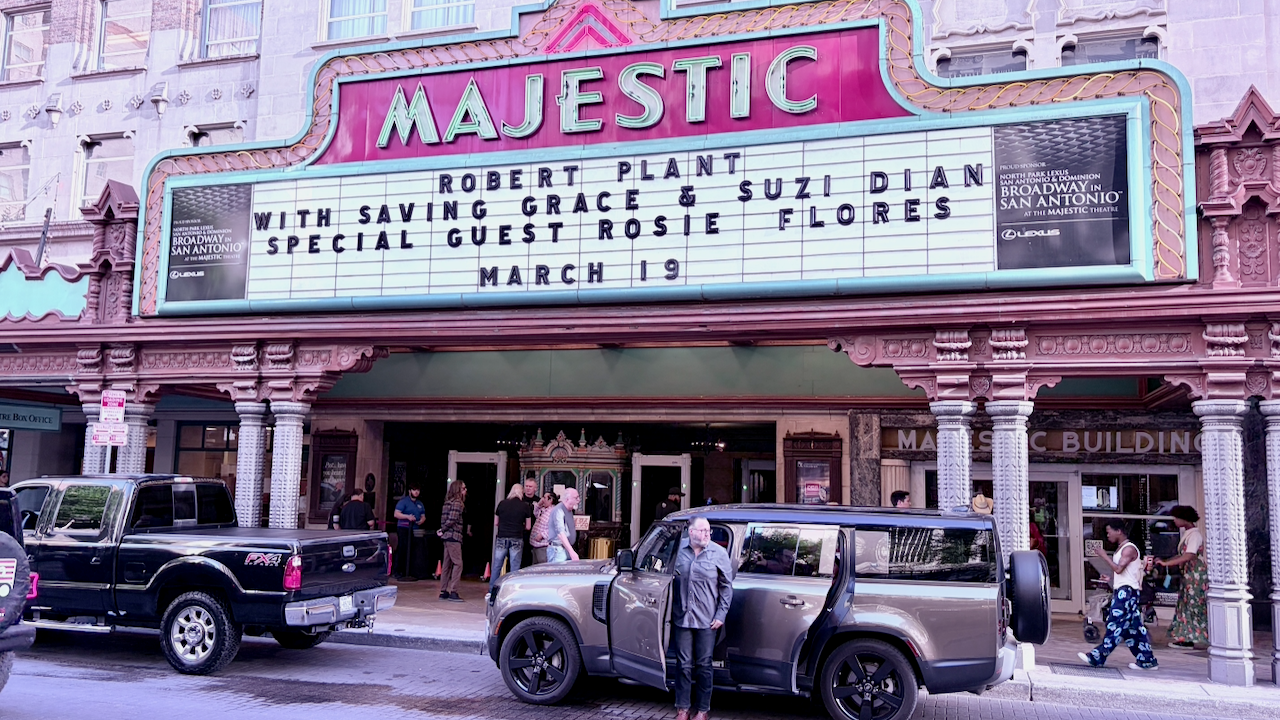
Their destination stood on Houston Street, a short walk from the river and the Alamo. The Gunter Hotel had first opened in 1909, but its recent reinvention had turned the old downtown landmark into something far less formal than Judd expected. Historic mouldings and high ceilings remained, yet bold fabrics, contemporary art and music-inspired details gave the public spaces the eccentric confidence of a fashionable private club. The hotel’s musical identity was not manufactured from nothing. Blues musician Robert Johnson had recorded there in 1936, and the renovated property now celebrated that heritage with an extensive vinyl library and a turntable in every room.
Ava discovered the records before Judd had finished examining the minibar. She returned from the lobby carrying albums by Marvin Gaye, Fleetwood Mac and Talking Heads, along with a look suggesting she had personally rescued them from obscurity.
“You took three?” Cindy asked.
“I showed restraint.”
Within minutes, the warm crackle of vinyl filled the room as the opening bars of Dreams drifted from the record player. Judd stood at the window looking over downtown, appreciating the deliberate anachronism of listening to an analogue recording in a hotel surrounded by modern towers.
“This place is very cool,” Ava admitted.
“Funky,” Cindy corrected.
Judd nodded. “Both things can be true.”
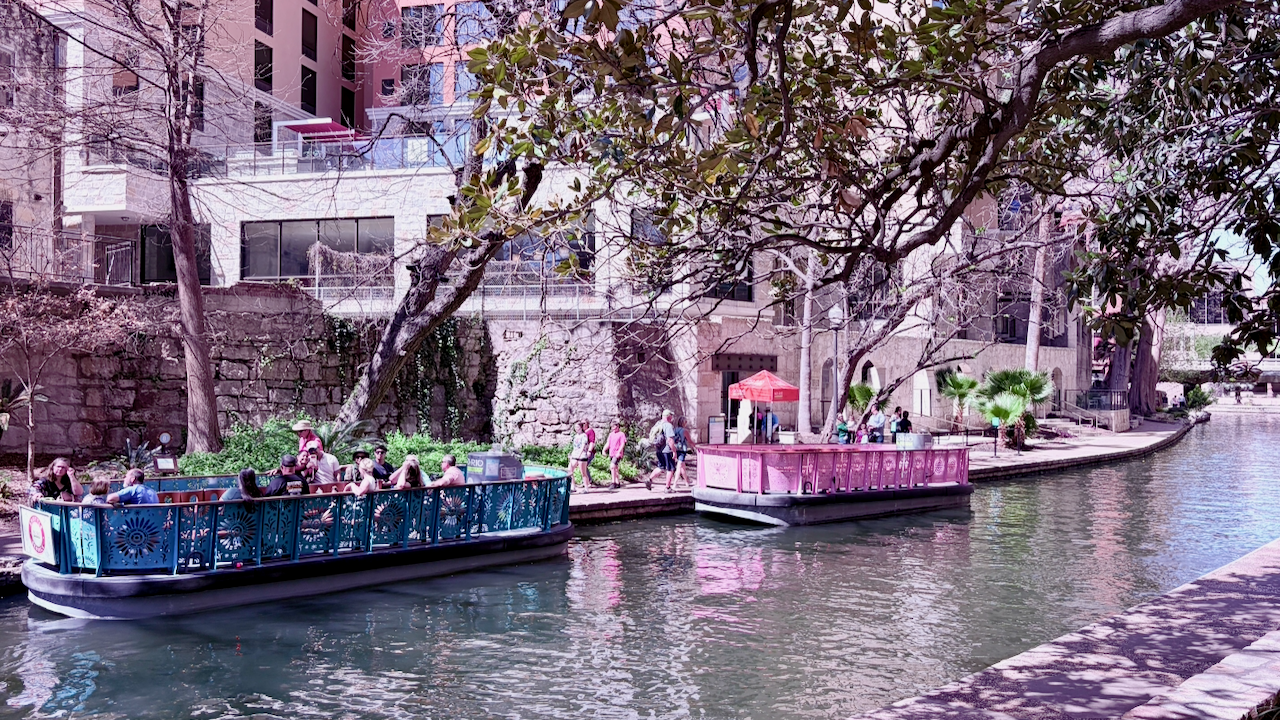
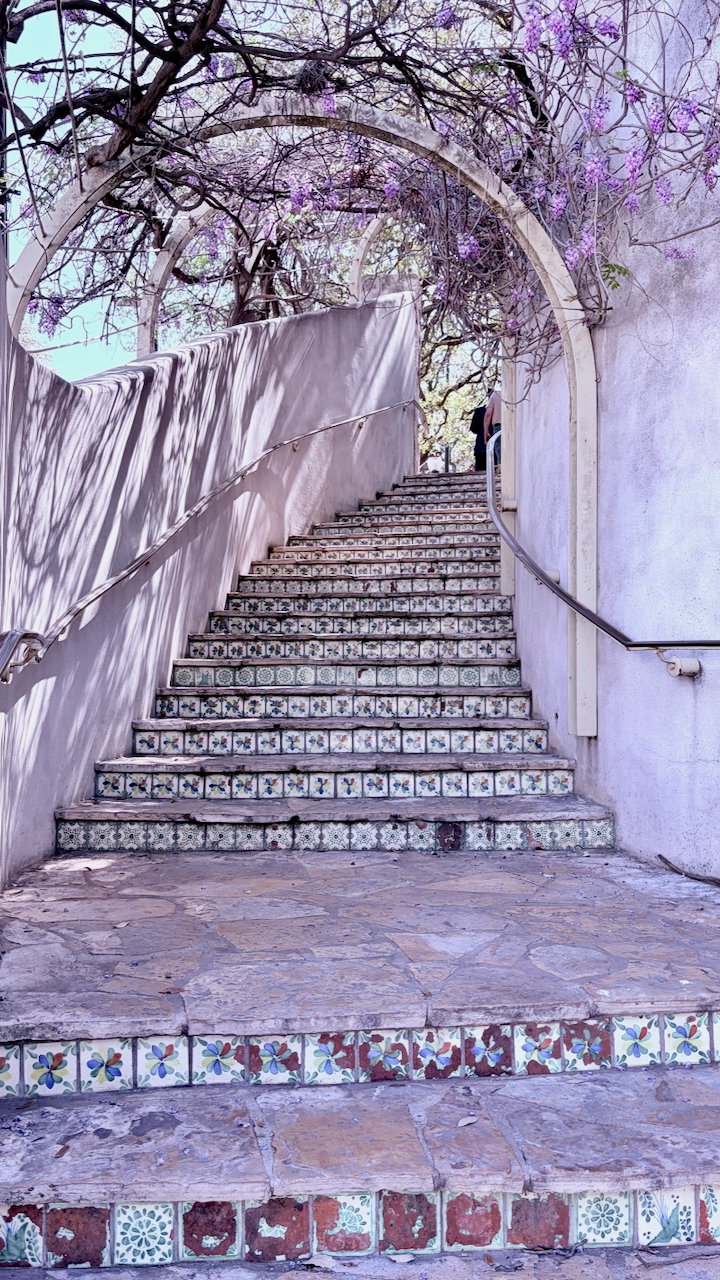
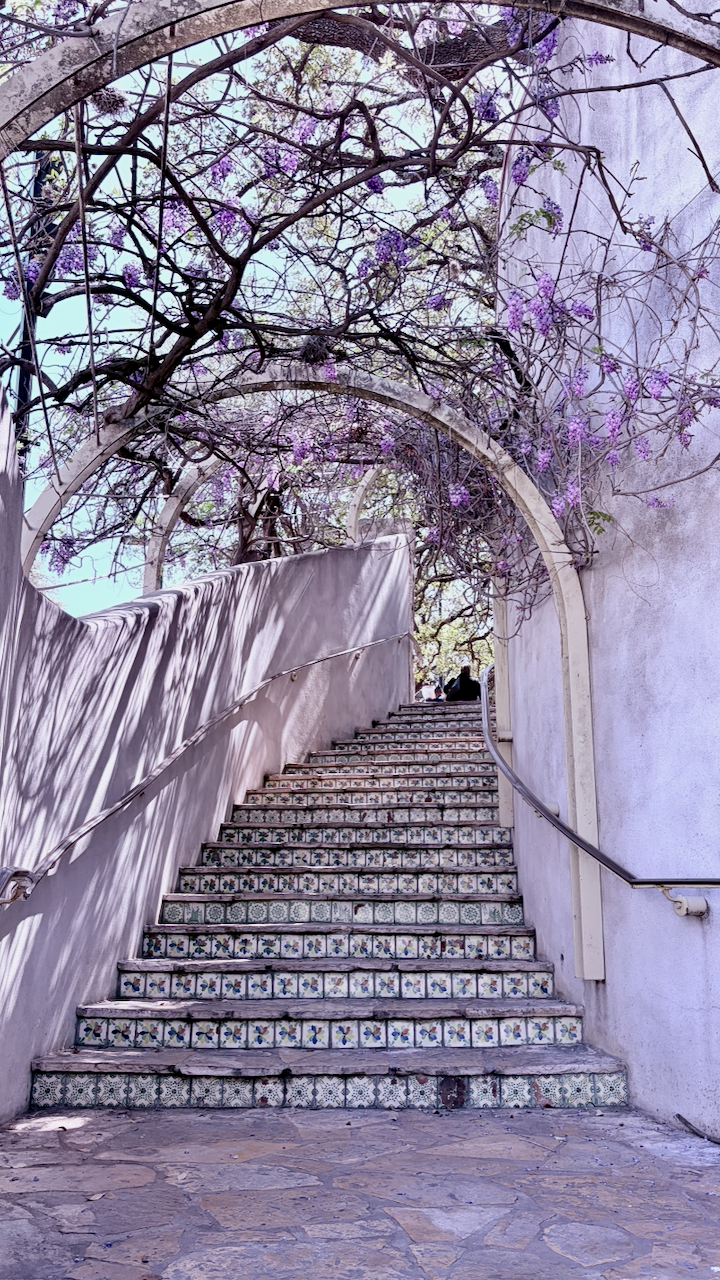
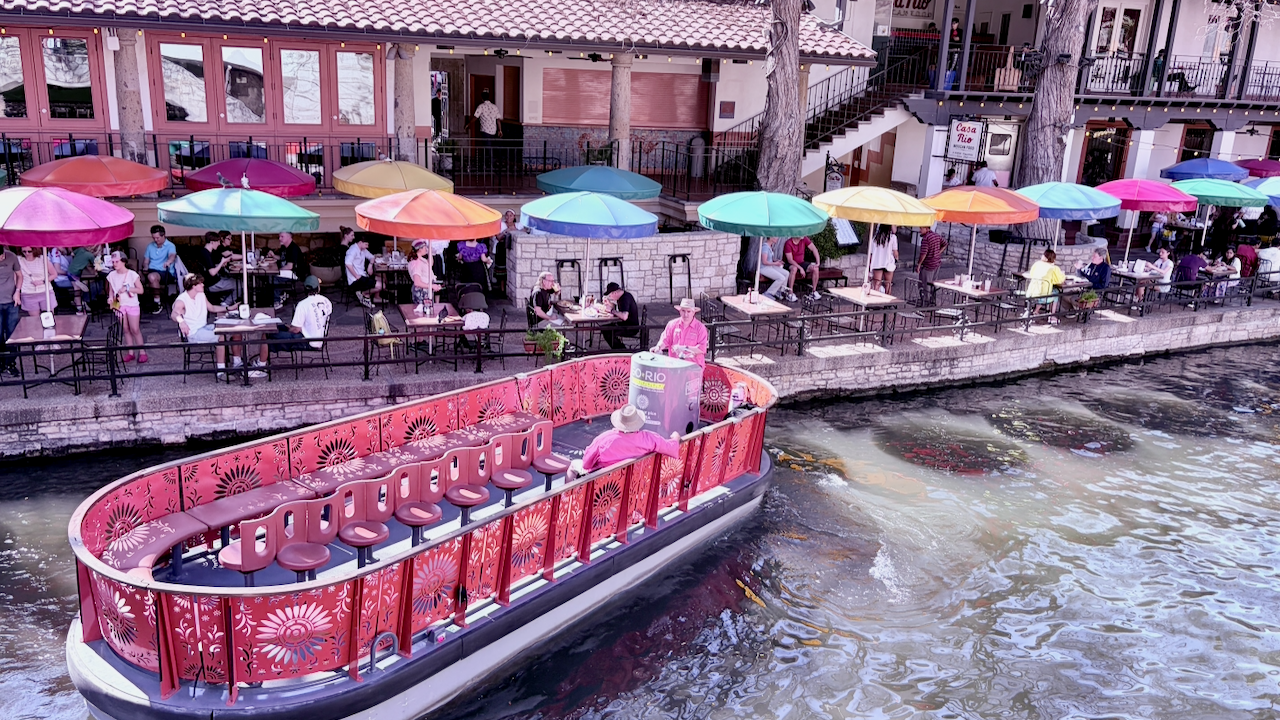
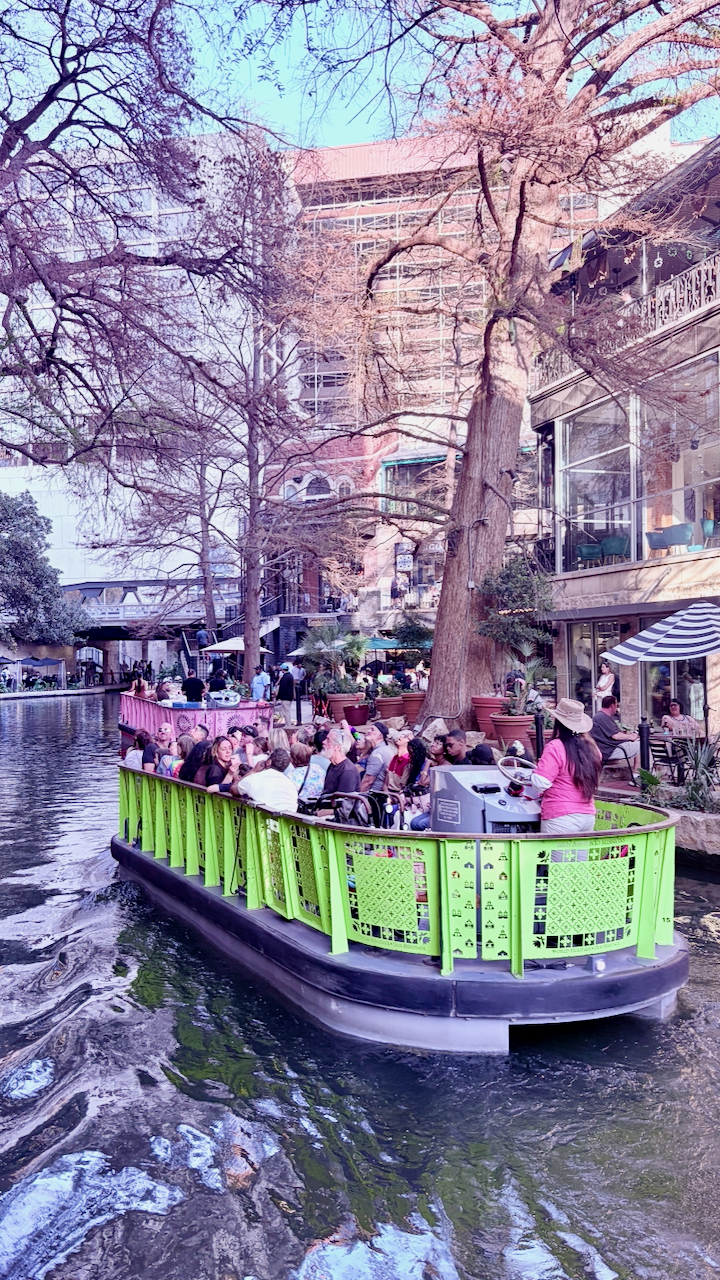
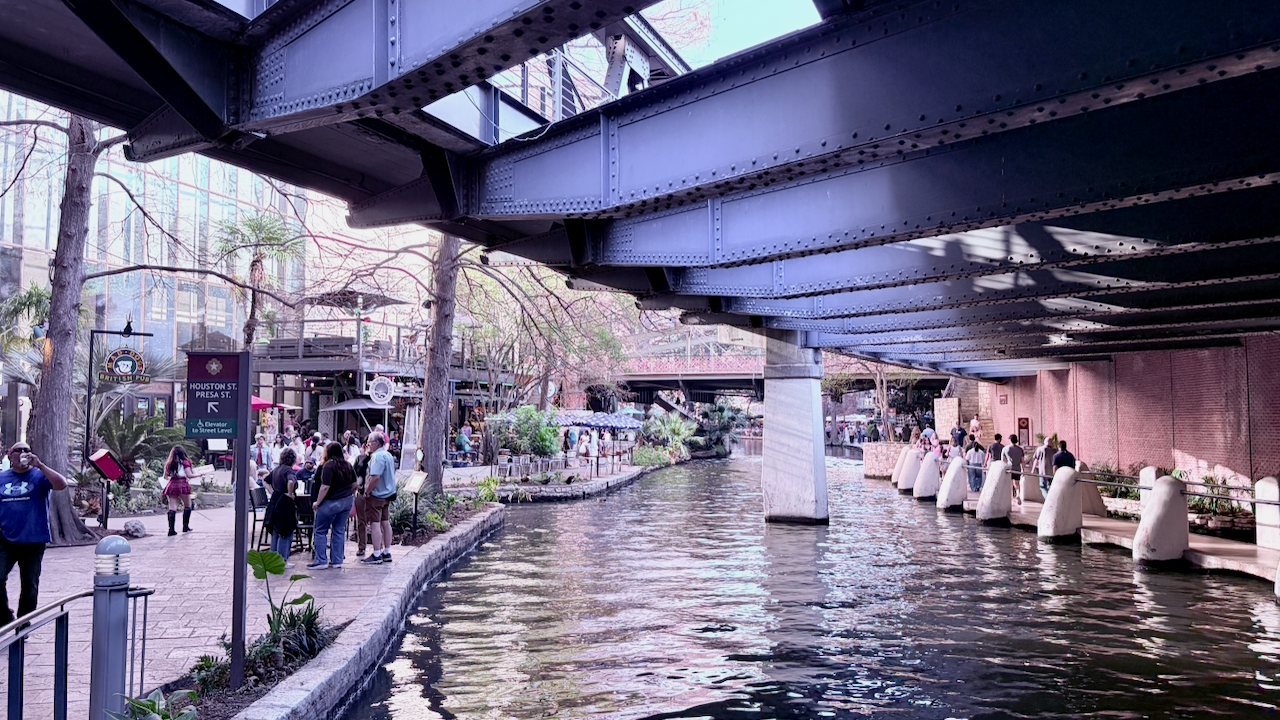
That evening they descended toward the River Walk, leaving the traffic and street noise behind as a staircase carried them below the level of downtown. The river curved between stone walls, restaurants and terraces shaded by mature cypress trees, while arched bridges crossed overhead and strings of lights reflected on the dark green water. What had begun partly as a response to catastrophic flooding was eventually transformed through the vision of architect Robert Hugman and Depression-era public works into one of America’s most distinctive urban spaces.
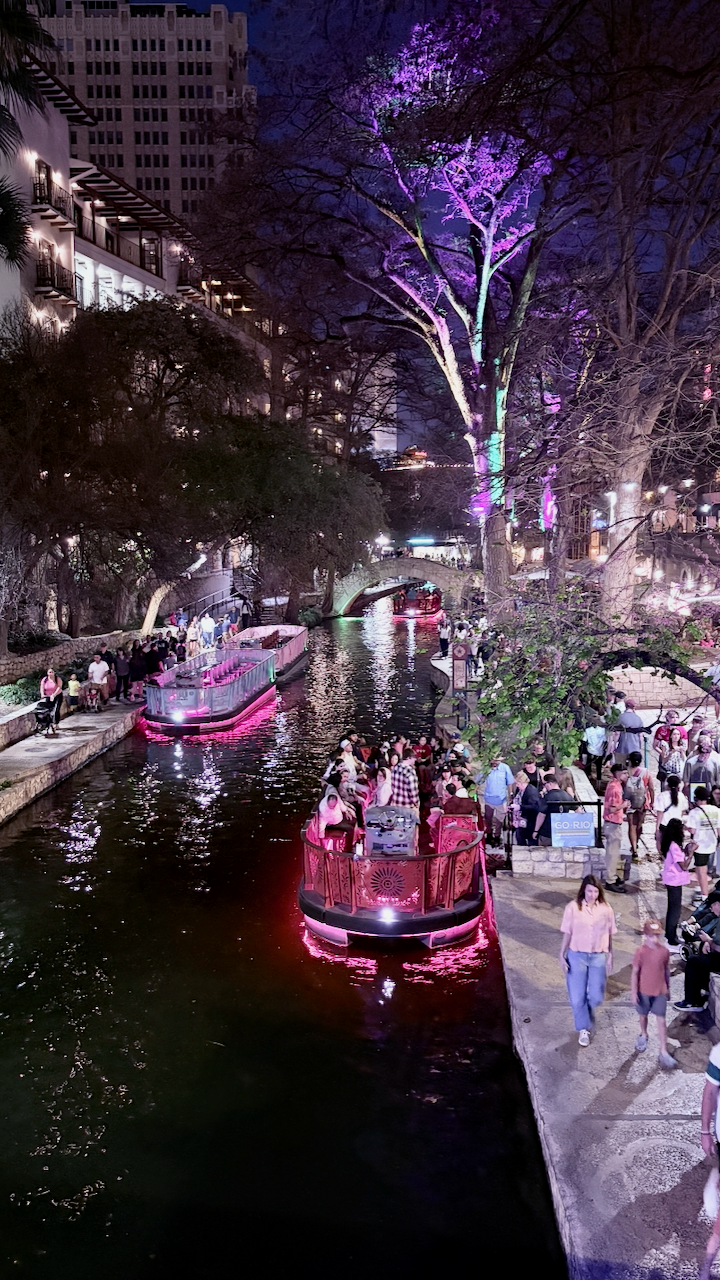
They ate beside the water at a crowded Mexican restaurant where bowls of salsa arrived before they had opened the menus and a small band played from a terrace across the river. Cindy ordered enchiladas, Ava chose tacos and Judd, after studying the menu with unnecessary seriousness, settled on carne asada and a local beer. Around them, San Antonio seemed to be enjoying itself without apology. Families celebrated birthdays beneath paper decorations, couples leaned close over candlelit tables, and groups of friends called to one another from the colourful river boats gliding past.
After dinner they walked without any destination in mind. River taxis and tour barges moved beneath the bridges, their guides telling stories to rows of passengers while music, laughter and the clatter of dishes spilled from the restaurants. Mariachi trumpets rose from one direction, electric guitar from another, and somewhere above them a church bell marked the hour. Judd had visited cities where nightlife felt manufactured for visitors, but the River Walk possessed a convivial energy that seemed to belong equally to tourists and locals. For several hours, the three of them allowed themselves to become part of it.
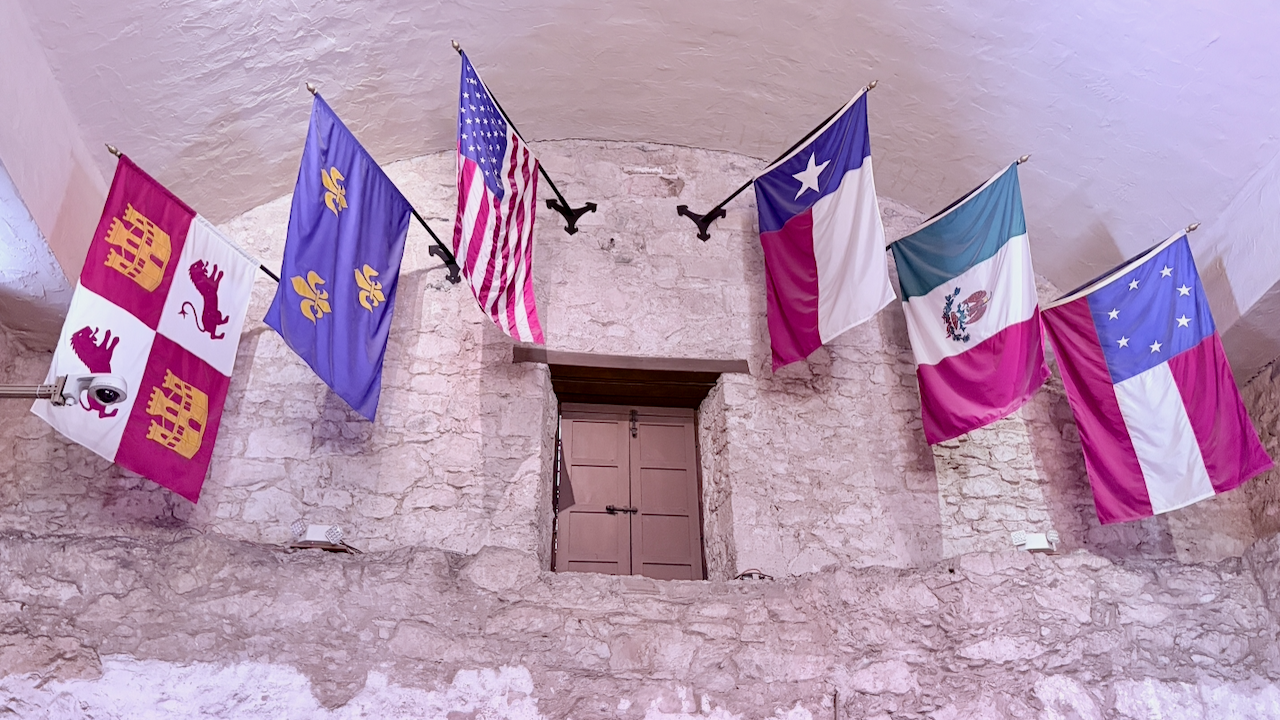
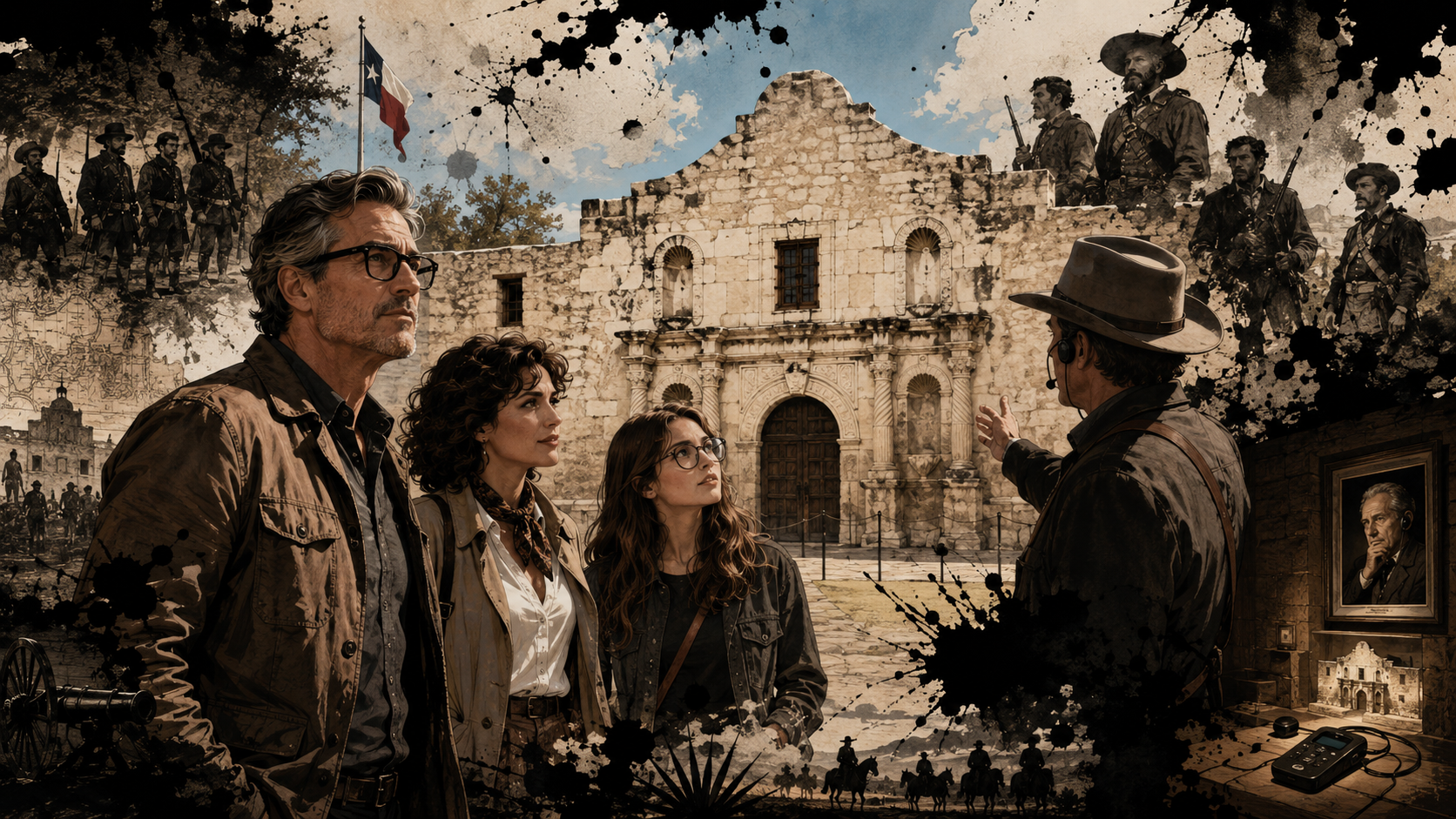
The following morning, they walked from the Gunter toward Alamo Plaza, where the famous mission church stood smaller than Judd had imagined and far more solemn. Modern San Antonio surrounded it on every side, yet the thick limestone walls still carried the weight of March 1836, when a garrison of Texian and allied defenders resisted the Mexican army for thirteen days before General Antonio López de Santa Anna ordered the final assault.
Their tour led them through the church, courtyards and exhibits while the story unfolded around them: the arrival of reinforcements, William Barret Travis’s appeals for help, the illness of Jim Bowie and the final attack before dawn on March 6. The defenders were overwhelmed, and the position fell, but the battle became a rallying cry that followed Santa Anna’s army to its defeat at San Jacinto several weeks later.
A familiar English voice emerged during part of the experience, and Ava stopped so abruptly that Judd nearly walked into her.
“Is that Phil Collins?”
It was. The legendary drummer and former Genesis frontman had developed a fascination with the Alamo as a child, eventually assembling an extensive collection of artifacts and documents. He later donated the collection to the State of Texas, and his voice featured within the modern visitor experience, including the narration accompanying the battle diorama.
“So,” Cindy said, “Phil Collins knows more about the Alamo than you do.”
Judd considered this. “For the moment.”
Standing inside the compound, he tried to imagine the smoke, noise and confusion of the final assault, when darkness and defensive walls would have reduced the battle to flashes of musket fire and fragments of shouted commands. He found himself considering the terrain as an operative rather than a tourist: the vulnerable perimeter, the limited manpower, the difficulty of maintaining communications and the near impossibility of defending such a large position against overwhelming numbers.
“What are you thinking?” Ava asked.
“That if The Inkwell Order had been charged with defending this place, we would never have attempted to hold the entire wall.”
Cindy gave him a sideways glance. “You lasted until almost noon before turning the holiday into an operation.”
“I’m discussing history.”
“You’re redesigning the defence.”
“History is full of lessons.”
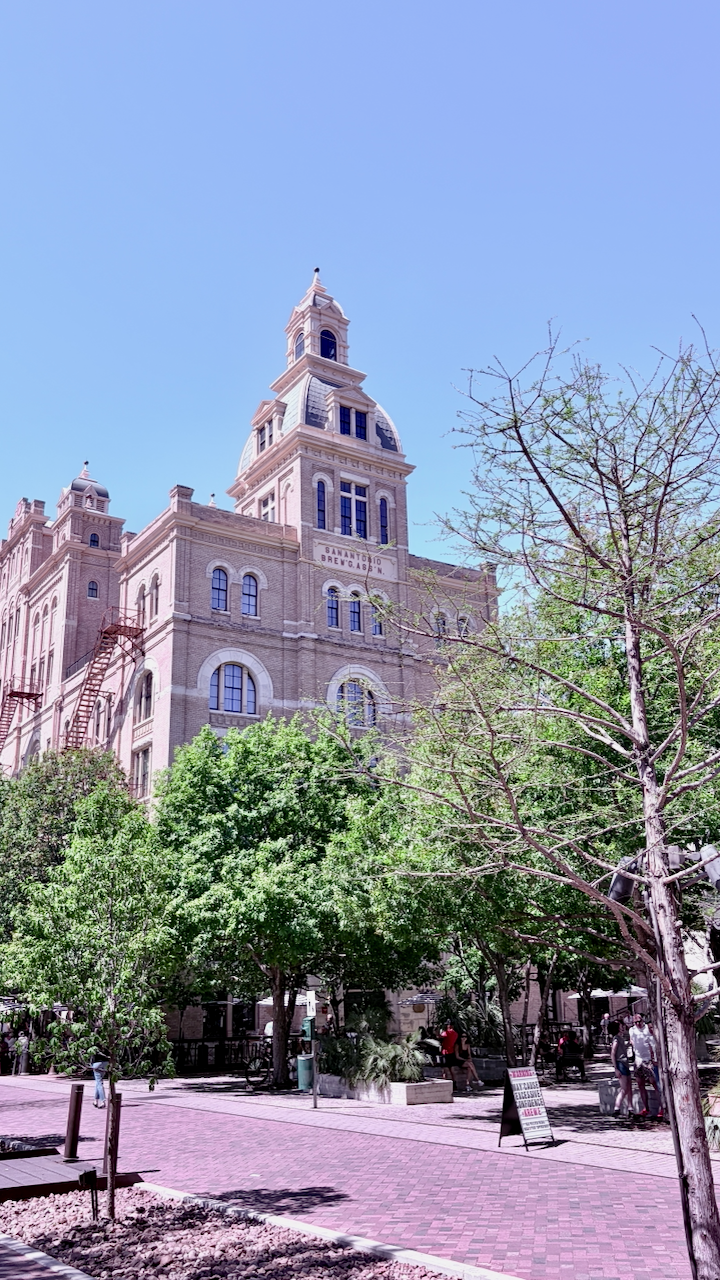
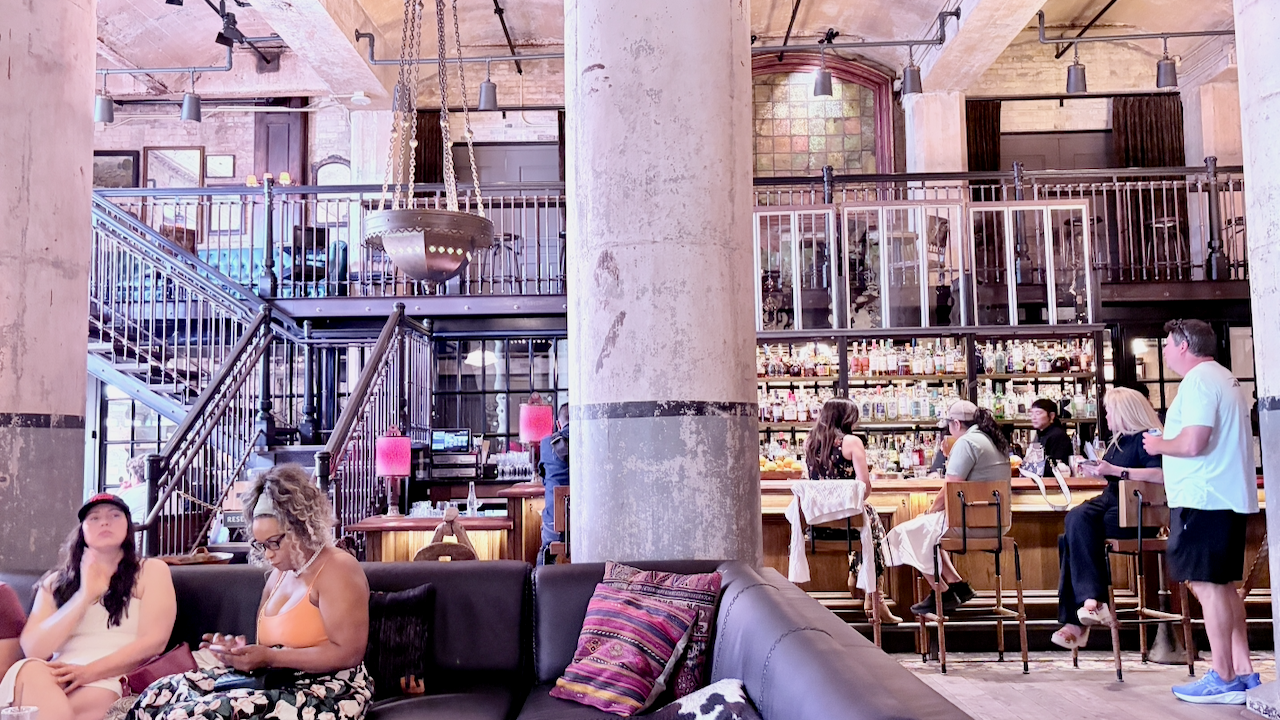
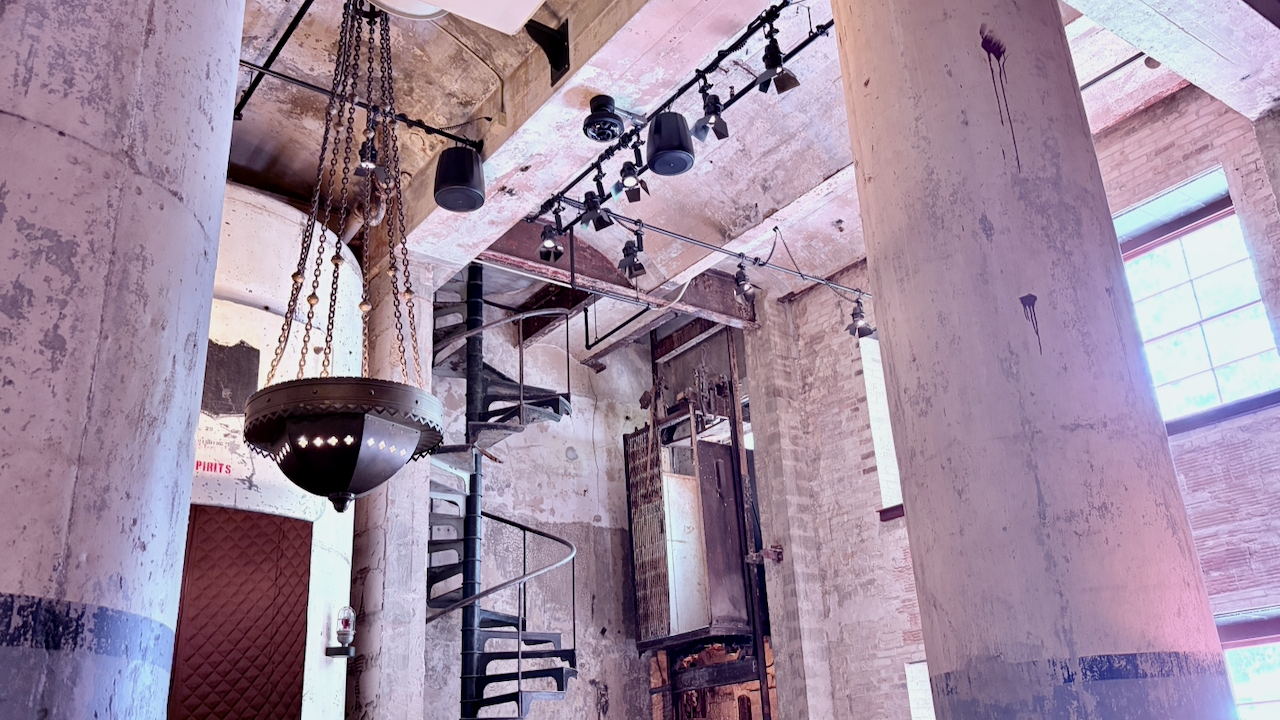
Their final stop was the Pearl, the former brewery complex north of downtown that had been transformed into a district of restaurants, shops, residences and public spaces. At its centre stood Hotel Emma, where the industrial past had been preserved rather than polished away. Inside, Sternewirth rose beneath a twenty-five-foot vaulted ceiling, its sofas, leather chairs and banquettes arranged around old cast-iron fermentation tanks converted into intimate seating areas.
They secured a table inside one of the tanks and ordered afternoon drinks—an old-fashioned for Judd, something bright and citrusy for Cindy, and a carefully constructed alcohol-free cocktail for Ava. For a while, none of them spoke about the Order, Wolf or the next assignment. They simply sat beneath the old brewery ceiling, listening to the murmur of conversation and enjoying the rare luxury of having nowhere else to be.
Judd raised his glass.
“To first visits.”
Cindy touched hers against it. “And proper weekends.”
Ava completed the toast. “Without anyone trying to kill us.”
It was, Judd thought, a modest ambition.
In their line of work, it was also something worth celebrating.